
Key points
- Four main payments are due at registration
- By law most fall on the seller, but contracts often split them
- Fix who pays what in the contract before booking
The charges
Transfer fee: 2%
Paid at the Land Office when ownership changes, calculated on the official appraised value. The contract decides who pays: often split 50/50, and on new builds the developer sometimes covers it as a promotion.
Specific business tax: 3.3%
Paid by the seller if they have owned the property for less than five years or sell as a business. Developers always pay it. It is calculated on the higher of the contract price or the appraised value.
Stamp duty: 0.5%
Applies only when there is no business tax, i.e. when the seller has owned the property for five years or more. The two are never charged together.
Withholding tax
The seller's income tax, withheld at registration. For company sellers the rate is 1%. For individuals it follows a progressive scale with a deduction based on years of ownership: the longer the ownership, the lower the tax.
Who usually pays what
- New build from a developer: the developer pays the business tax and withholding tax; the transfer fee is split or covered by the developer.
- Resale: the seller pays the seller's taxes and the transfer fee is usually split. In Phuket parties sometimes agree to split everything 50/50, so read the contract.

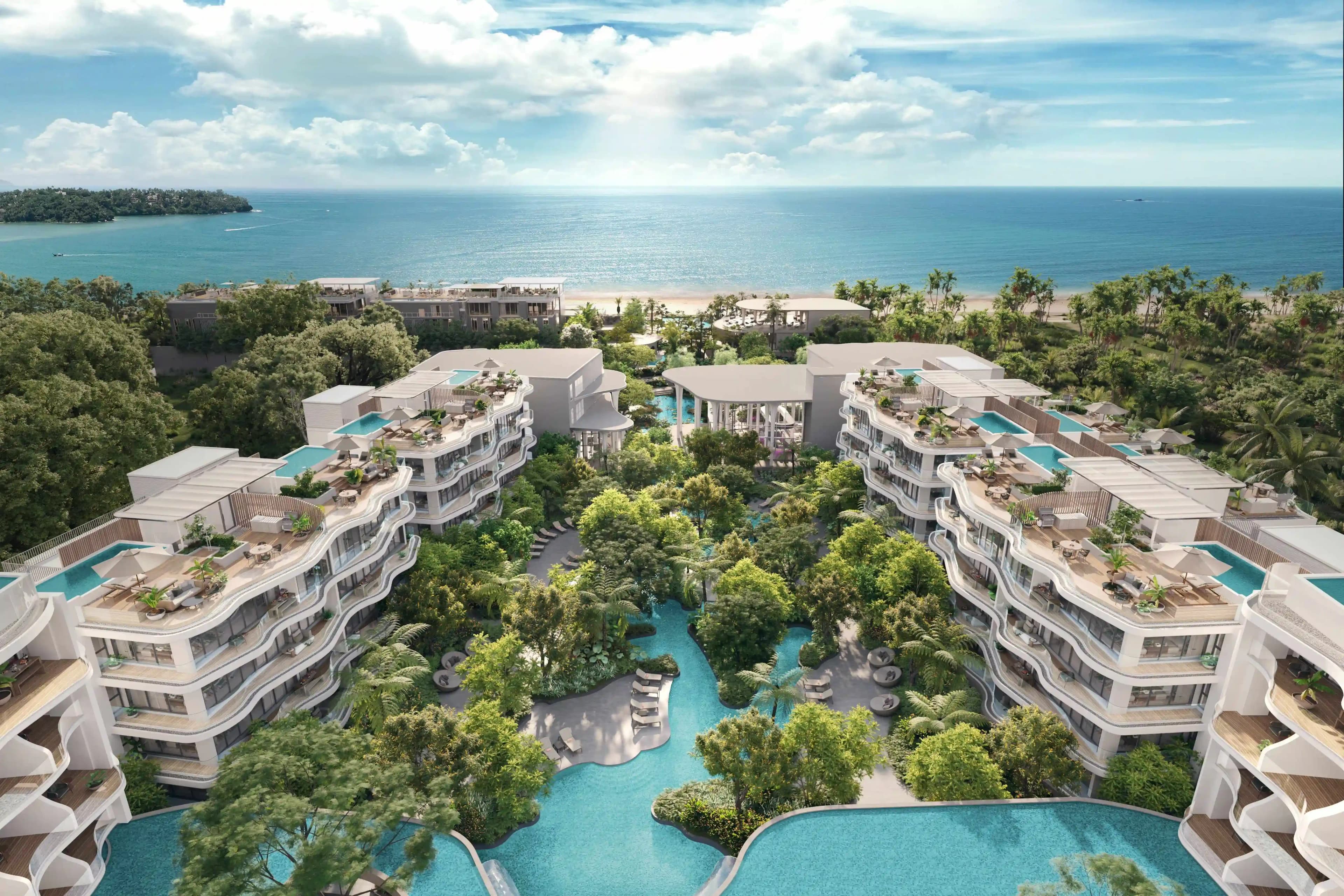
Photo: The Title Artrio Bang-Tao, Bang Tao, Phuket
Example 1: a new condo for 5 million baht
Bought from a developer, with the transfer fee split 50/50:
- transfer fee 2%: 100,000 baht, the buyer pays 50,000;
- business tax 3.3%: 165,000 baht, paid by the developer;
- withholding tax 1%: 50,000 baht, paid by the developer.
The buyer pays about 50,000 baht in taxes and fees, or 1% of the price.
Example 2: a resale condo for 4 million baht
An individual seller who has owned the unit for six years, with the transfer fee split:
- transfer fee 2%: 80,000 baht, the buyer pays 40,000;
- stamp duty 0.5%: 20,000 baht, paid by the seller, with no business tax;
- withholding tax: calculated by the Land Office on the scale, paid by the seller.
The buyer pays about 40,000 baht. Had the seller owned the unit for under five years, the 3.3% business tax would apply instead of stamp duty, and the seller might build it into the price.
One-off building charges
These are not taxes but are also paid at handover:
- the sinking fund: usually 500–1,200 baht per m², once;
- prepaid maintenance, often a year in advance;
- electricity and water meter connection.
For a 35 m² unit that adds about 40,000–60,000 baht. More in Cost of owning a condo or villa.
Photo: Citygate, Kamala, Phuket
The 0.01% relief: who it does not cover
Thailand has a reduced transfer and mortgage registration fee of 0.01% instead of 2% and 1% for properties under 7 million baht. It has been extended to 30 June 2027 but applies only to Thai nationals. Foreigners and companies pay the full rate. A calculation showing 0.01% for a foreign buyer is a mistake.
Land lease for a villa
When a villa is held through a land lease, registering the lease costs 1% of the total rent for the term plus 0.1% stamp duty. The house bought outright is taxed under the general rules. Exact amounts depend on how the price is split between the lease and the house.
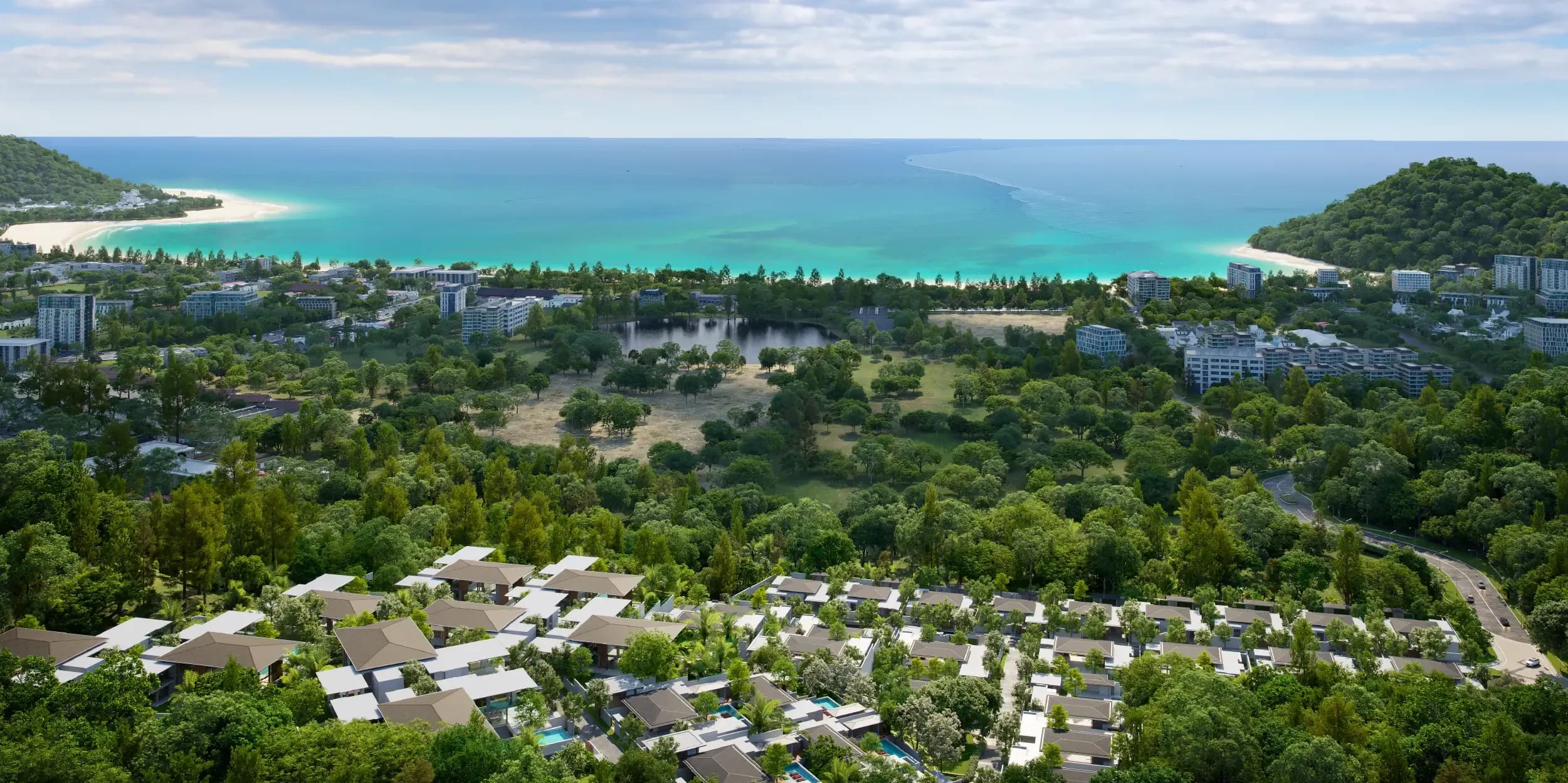
Photo: Botanica Montazure, Kamala, Phuket
Annual tax after purchase
Owners pay land and building tax: 0.02% of the appraised value a year for personal use and 0.3% if rented out. For a 5 million baht condo that is about 1,000 or 15,000 baht a year.
How not to overpay
- State in the contract who pays each tax and fee.
- Ask the developer about promotions: sometimes the seller covers the whole transfer fee.
- On resale, ask how long the seller has owned the unit: it decides between 3.3% and 0.5%.
- Find out the appraised value in advance: the transfer fee is based on it.
- Keep the receipts: you will need them when you sell.
We will calculate the full costs for a specific project before you reserve. Get in touch, it is free.
Frequently asked questions
How much tax does a condo buyer pay in Thailand?
Usually half the transfer fee, around 1% of the price. By law the other taxes are the seller's unless the contract says otherwise.
Does the 0.01% reduced fee apply to foreigners?
No, it is for Thai nationals only. Foreigners pay 2%.
When is the 0.5% stamp duty charged?
When the seller has owned the property for five years or more and the 3.3% business tax does not apply.
What is the transfer fee based on?
The official appraised value of the property.
Is there an annual property tax?
Yes, land and building tax: 0.02% for personal use and 0.3% if rented out.
For general information only, not tax advice. Sources: Lex Bangkok, HLB Thailand, Storm Phuket, Lex Bangkok: land tax.
Updated


