

Key points
- A check takes about a week
- Look at completed projects, company, land, permits and courts
- Part of it you can do yourself
1. Track record: what the developer has delivered
- How many projects are completed and whether they were late. The promised and actual completion dates say more than any advertising.
- How completed buildings look after 3–5 years: facades, pools and shared areas.
- How the management company works and how many owners rent out their units.
Our developers section is a good start: it shows how many projects each developer has completed and under construction, plus all current projects.

Photo: The Title Villa Kirara, Bang Tao, Phuket
2. The company
- An extract from the company register (Department of Business Development): registration date, directors and who may sign the contract.
- Listed companies publish accounts on the SET exchange. That adds transparency but is not a guarantee: look at the specific project too.
- A separate company for each project is normal practice. What matters is who stands behind it and whether that team has completed buildings.
3. The land
The best land title is a Chanote (Nor Sor 4 Jor): full ownership with precise boundaries. Nor Sor 3 Gor is acceptable and can be upgraded to a Chanote. Sor Kor 1 and tax receipts do not prove ownership; avoid such land.
At the Land Office, check who owns the plot and whether there is a mortgage, lease or other encumbrance. A bank mortgage during construction is common, but the contract should say when it will be released from your unit.
4. Permits
- A building permit from the municipality, and the actual project matching it.
- An approved environmental impact assessment for large projects. More in What is an EIA.
- For a completed building: the occupancy certificate.

Photo: The Base Chenrgtalay, Bang Tao, Phuket
5. Lawsuits and debts
Check that there are no court cases or seizures involving the plot or the company. A lawyer does this through court records and the Land Office.
6. Contract and payment schedule
- For condominiums the contract must follow the standard form: terms worse for the buyer have no effect.
- A penalty for late completion and the right to cancel with a refund.
- The main payments are better placed late in construction and at handover.
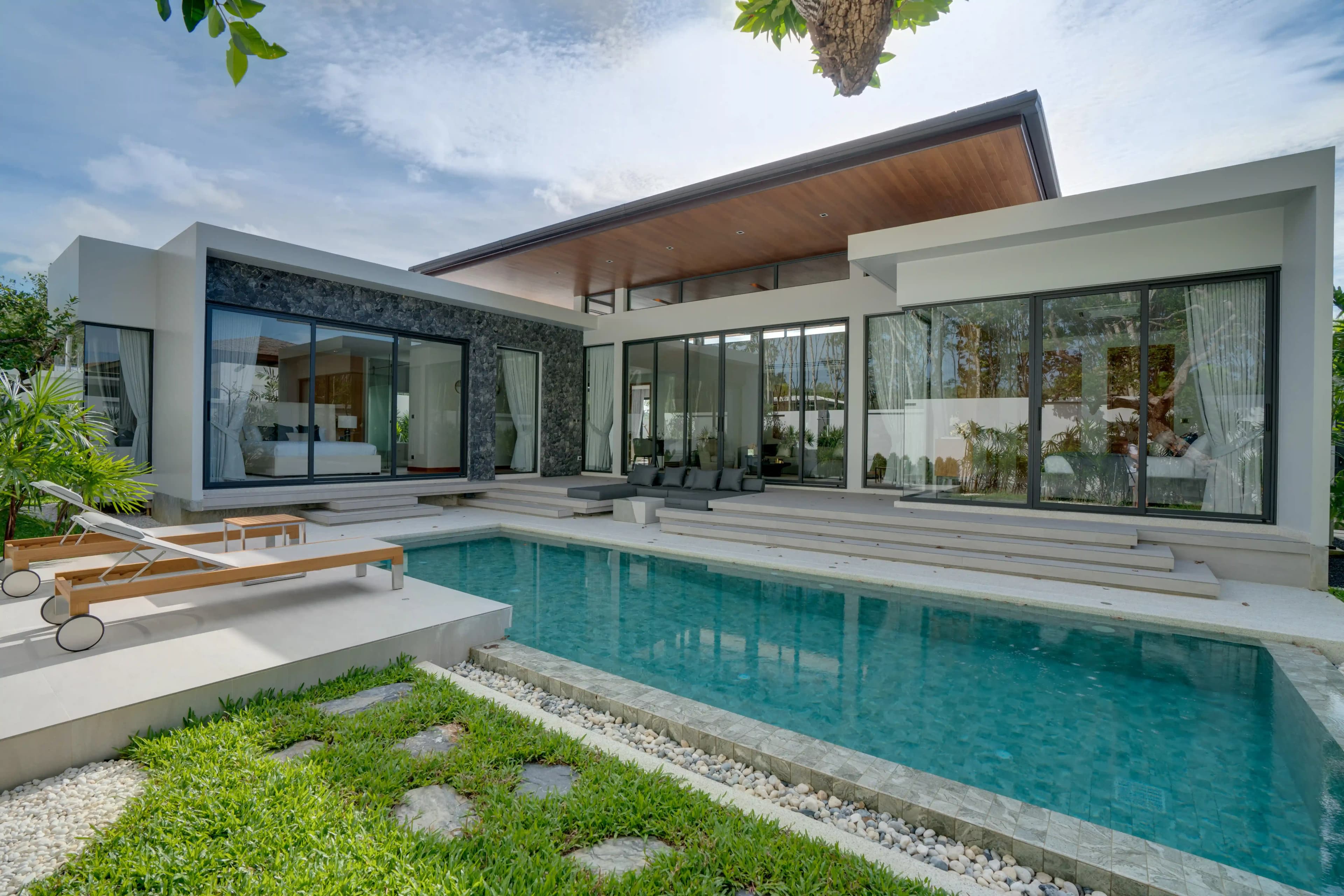
Photo: Botanica Modern Loft II, Layan, Phuket
What you can check yourself and what to leave to a lawyer
You can research the track record, completed buildings and reviews yourself. Land, encumbrances, lawsuits and the contract are best left to a lawyer who works with original documents in Thai.
We run this checklist on every project, free for buyers. Send us a project you are considering and we will tell you what we find.
Warning signs
- No completed projects, yet several on sale at once.
- Past projects delivered more than a year late without explanation.
- Completed buildings look neglected and maintenance fees are not collected.
- The contract is signed by a company that does not own the land or the right to build on it.
Land title types, from best to worst
- Chanote (Nor Sor 4 Jor): full ownership with GPS-surveyed boundaries. The best option.
- Nor Sor 3 Gor: confirmed possession with an accurate survey, upgradable to a Chanote. Acceptable.
- Nor Sor 3: possession without an accurate survey, with a risk of boundary disputes. Caution.
- Sor Kor 1 and tax receipts: not proof of ownership. Avoid.
Sales and money
- How many units are sold: slow sales can drag out construction.
- Whether construction is on schedule: ask for recent photos and video.
- How the developer funds construction: own funds, a bank, or buyers' money only.
The checklist in one list
- Completed projects and timelines.
- The state of buildings after a few years.
- Company extract and signatory authority.
- Land title and encumbrances.
- Building permit and EIA.
- Lawsuits and debts.
- Sales and construction pace.
- Contract and payment schedule.
Frequently asked questions
Which land title is the most secure?
A Chanote (Nor Sor 4 Jor): full ownership with precise plot boundaries.
Is a listed developer always more reliable?
Not always. It is more transparent, but the delivery record and the documents of the specific project decide.
How long does a check take?
Usually a few days to a week, depending on how quickly the developer provides documents.
Can I buy from a developer with no completed projects?
You can, but the risk is higher. Check the land and permits especially carefully and choose a schedule with the main payment at handover.
For general information only, not legal advice. Sources: Terms.Law: due diligence checklist, ThaiLawOnline.
Updated


